
Osteoarthritis of the knee and hip is one of the most prevalent musculoskeletal disorders, affecting approximately 10–15% of the general population, particularly individuals over 60 years of age. Recent advances in orthopedic surgery have fundamentally improved both patient experience and clinical outcomes in arthroplasty.
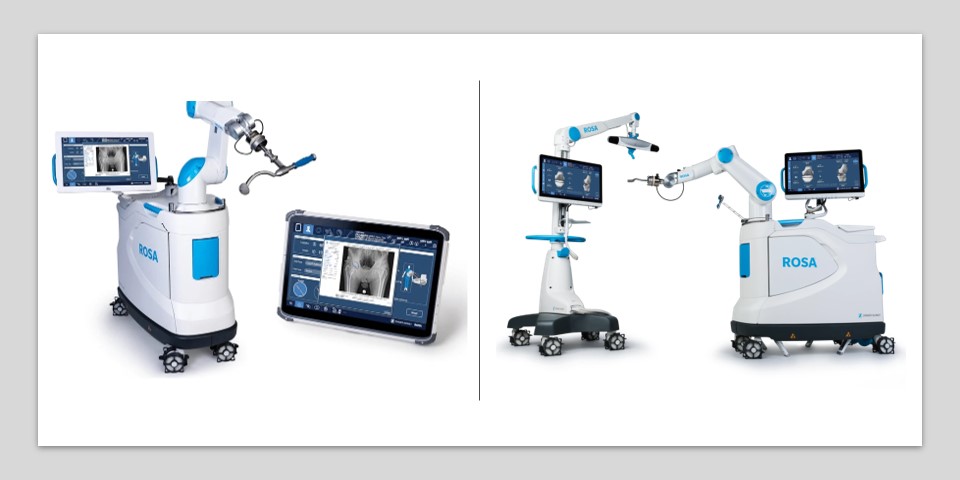
At Henry Dunant Hospital Center, the use of the ROSA® (Robotic Surgical Assistant) system, in combination with fast-track rehabilitation protocols and modern personalized surgical techniques (functional alignment), offers high precision, enhanced safety, and rapid return to activities of daily living.
Robotic-Assisted Knee Arthroplasty
The ROSA® Knee system functions as an intelligent robotic assistant that supports the surgeon at every stage of the procedure, while the surgeon maintains full control.
Advantages
- Millimetric precision in implant placement
- Individualized preoperative planning based on the patient’s anatomy
- Image-based or imageless planning options
- No requirement for CT scanning (reduced radiation exposure and cost)
- Immediate surgical scheduling without delays
- Optimal ligament balancing
- Supports all contemporary alignment techniques and philosophies
- Use of state-of-the-art arthroplasty systems worldwide
Patient benefits
- Minimal postoperative pain
- Rapid mobilization, even on the same day
- Reduced length of hospital stay (even same-day discharge)
- Faster return to activities of daily living
- High satisfaction rates
Robotic-Assisted Hip Arthroplasty (ROSA® Hip)
The latest advancement in ROSA® technology concerns hip arthroplasty, combining robotic precision with a minimally invasive anterior approach (Anterior-Based Muscle-Sparing).
Key Features
- Robotic assistant providing real-time intraoperative guidance (“surgical GPS”)
- Muscle-sparing anterior approach
- Smaller incisions with minimized soft tissue trauma
- Preoperative planning via ONE Planner™ Hip (cloud-based)
- Auto-Plan generation within minutes
- Spinopelvic mobility assessment
- Use of plain radiographs without the need for CT imaging
Clinical Benefits
- Accurate implant placement within “safe zones”
- Reduced risk of dislocation
- Avoidance of limb length discrepancy
- Patient-specific approach
Patient benefits
- Less pain and faster recovery
- Ambulation and mobilization within the first hours postoperatively
- Return to driving within 2–3 weeks
- Return to sports activities at approximately 3 months
- Short hospital stay (1–2 days or even same-day discharge)
Indications
Robotic-assisted knee and hip arthroplasty is applied to patients with:
- Advanced osteoarthritis
- Rheumatoid arthritis
- Post-traumatic arthritis
- Osteonecrosis
- Hip dysplasia
- Other degenerative joint disorders, when conservative treatment has failed
The integration of ROSA® robotic technology at Henry Dunant Hospital Center marks a new level of precision and personalization in arthroplasty surgery, offering patients safer procedures, faster recovery, and optimal functional outcomes.