Diabetes Clinic
Diabetes mellitus is a chronic metabolic disease that occurs when the pancreas does not produce insulin or when insulin does not function effectively in the body. The result in an increase in blood glucose level (hyperglycemia) and a disturbance in the metabolism of glucose, lipids and proteins.
The main types of diabetes mellitus are:
- Type 1 Diabetes Mellitus
- Type 2 Diabetes Mellitus
- Gestational diabetes
- Specific and less common types of diabetes
At the Diabetes Clinic of Henry Dunant Hospital Center, comprehensive care is provided to individuals with any type of diabetes or prediabetes, including:
- Patients with type 1 diabetes who receive multiple daily insulin injections or use an insulin pump
- Patients with type 2 diabetes who receive oral antidiabetic medications and/or insulin
- Women with gestational diabetes
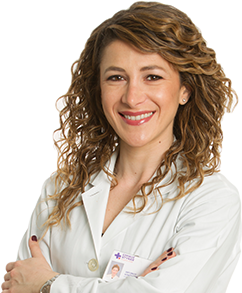
The Diabetes Clinic is staffed by internists - diabetologists, an endocrinologist and a nurse specialized in the treatment of diabetes. It is supported by the Hospital’s Department of Nutrition and Dietetics, and operates in close collaboration with all medical specialties (cardiology, ophthalmology, nephrology, vascular surgery, gastroenterology, dermatology, and orthopedics), as well as with the hospital’s laboratories (hematology, biochemistry, microbiology, radiology, and nuclear medicine)
Services provided
At the Diabetes Clinic:
- A comprehensive electronic medical record is maintained for each patient
- Systematic clinical assessment is performed (body weight, blood pressure, pulse rate, oxygen saturation, blood glucose)
- Laboratory test results and glycemic data are evaluated
- Individualized treatment adjustments are made, along with electronic prescribing of medications, medical supplies, and diagnostic tests
- Diabetes-related complications, including diabetic ulcers, are treated
- Medical reports and certificates are issued when required
- Patient follow-up and reassessment are scheduled
The Diabetes Clinic has significant experience in educational activities and in providing information to patients and the general public regarding the proper management of diabetes
Diabetes Technology Clinic
Within the framework of the Diabetes Clinic of of Henry Dunant Hospital Center, the Diabetes Technology Clinic operates under the supervision of Asimina Mitrakou, Professor Emerita at National Kapodistrian University of Athens (NKUA). The Clinic now offers Continuous Glucose Monitoring (CGM), a modern technology that enables 24-hour monitoring of blood glucose levels, with measurements taken every few minutes.
CGM technology uses a tiny sensor placed on the skin that measures glucose in the interstitial fluid. The data are transmitted wirelessly to a receiver device or smartphone and are analyzed by the medical team, providing a comprehensive view of glycemic control.
Benefits of continuous glucose monitoring:
- Detection of hypoglycemia and hyperglycemia, especially during the night
- Analysis of glycemic trends and time in range (TIR)
- Optimization of medication and insulin therapy
- Personalized dietary and therapeutic guidance
- Possibility for remote monitoring and collaboration with the treating physician
Continuous glucose monitoring is a valuable tool for individuals with type 1 and type 2 diabetes, as well as for high-risk patients or those experiencing frequent glycemic fluctuations.
Diabetes Technology Clinic Hours: Every Wednesday, 10:00 AM – 2:00 PM
Our goals
The goal of the Diabetes Clinic is to provide comprehensive and individualized care for patients with diabetes, utilizing modern technologies, interdisciplinary collaboration, and ongoing education, in order to achieve optimal glycemic control and improve quality of life.
Equipment
In accordance with ministerial decision specifications, the examination room is fully equipped with devices for measuring whole blood glucose levels, urine ketone measuring devices, sphygmomanometer for measuring blood pressure, oximeter, scale, anasthimeter and a device for measuring glycosylated hemoglobin. The examination room is also equipped with a pedobarograph, monofilament and a tuning fork, as well as a doppler device for the assessment of neuropathy and arteriopathy.
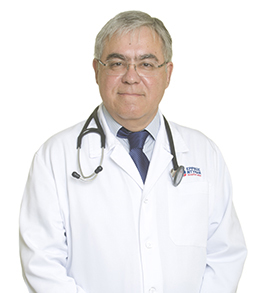
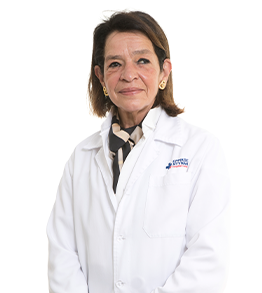
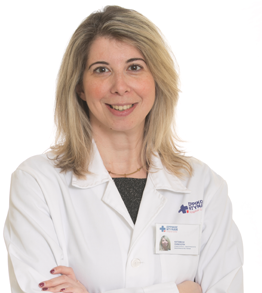
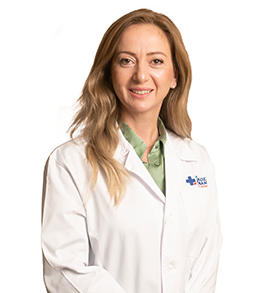
Scientific staff
Tsapogas Panagiotis,
Mitrakou-Fanariotou Asimina
Katsiveli Penelopi
Christodoulou Dimitra
Antoniou Constantina
Equipment
In accordance with ministerial decision specifications, the examination room is fully equipped with devices for measuring whole blood glucose levels, urine ketone measuring devices, sphygmomanometer for measuring blood pressure, oximeter, scale, anasthimeter and a device for measuring glycosylated hemoglobin. The examination room is also equipped with a pedobarograph, monofilament and a tuning fork, as well as a doppler device for the assessment of neuropathy and arteriopathy.